“Never judge a book by its cover.” The stern adage rang in my head as I picked this book out of the library sale with what was probably an audible gasp. This book is stunning to behold, with its purple-edged pages and features picked out in gold. If anything it is even more beautiful once bereft of its dust jacket, its hard cover adorned with traditional intricate decorations. And for £1.50 it was mine. Only when I got home did I also discover that it was signed by the author. What a steal.
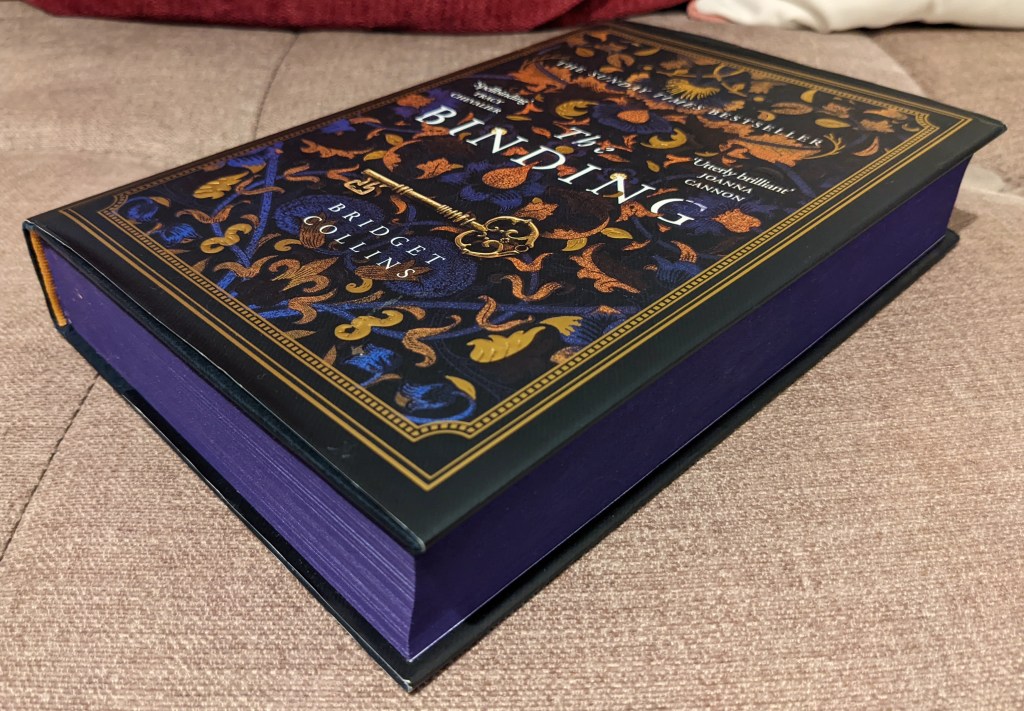
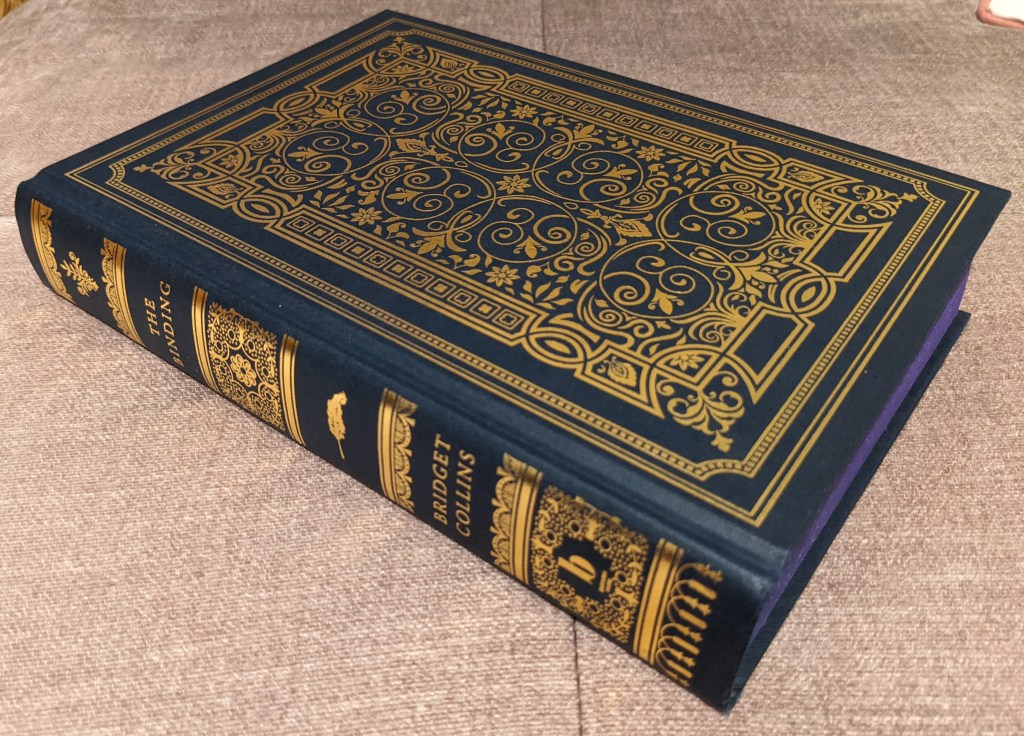

This is a novel by Bridget Collins published in 2019. It tells the tale of a young man called to be a binder – which in this world is a magical craft that involves alleviating a person of their painful memories and capturing them in a book. Then he discovers a book with his own name on it.
The premise was enticing. It appealed to me for several reasons: one is that I have dabbled in bookbinding myself (the humdrum sort, not the mystical memory extraction sort). Another was that I had recently re-watched The Eternal Sunshine of the Spotless Mind – a great film about erasing a person from memory – and I was intrigued by this variation upon the theme. A third was that this story about the art of bookbinding came so gorgeously, so appropriately, packaged.
“Never judge a book by its cover,” says conventional wisdom. Alas, I had done just that. My expectations had been set dizzyingly high: I was ready to be whisked away, and to treasure this exquisite book for eternity. Instead I found that it was merely… OK. Given my high hopes, “OK” was a heavy disappointment.
The initial problem was that I simply wasn’t gripped. I spent about two weeks trudging through the first third of the book – reading the odd chapter and failing to find the enthusiasm to read another. I nearly gave it up. The mystery of the story irritated rather than captivated me – I felt untethered, struggling to work out what was going on, or even when and where this was supposed to be set, and I didn’t feel I had much reason to care. Finally I got to the middle section of the book – which provided explanations via a flashback – at which point I was invested, and read the rest of the book in a day. Suddenly I understood the romance and the tragedy of this tale; suddenly I had a reason to care. But it shouldn’t have taken that long.
There are plenty of positive things to be said about this book. The prose was beautiful, and replete with interesting vocabulary. The building of the romance was subtle and lovely. The bookbinding concept was compelling. But I felt that these virtues were let down by a slow and (to my mind) unresolved story arc. Eternal Sunshine did it better.
Let that be a lesson to me about appearances. But authors and publishers should also take note: if you create something that looks like it could have tumbled through a portal from a magical land, you’re going to have to deliver.
 Cryptic Meg