A bit of flavour was added to my reading these last couple of months, because I joined a book group! A couple of people I know from choir invited me to join, and I was very pleased to accept. I’ve thoroughly enjoyed my first couple of sessions (especially because of the excellent spreads of food and wine). We meet one evening a month, and borrow books from the local library through a reading group scheme. It’s nice to be supporting the library, and should help maintain my reading motivation.
But first, a few other books I’ve read recently…
Femina: A New History of the Middle Ages – Janina Ramirez
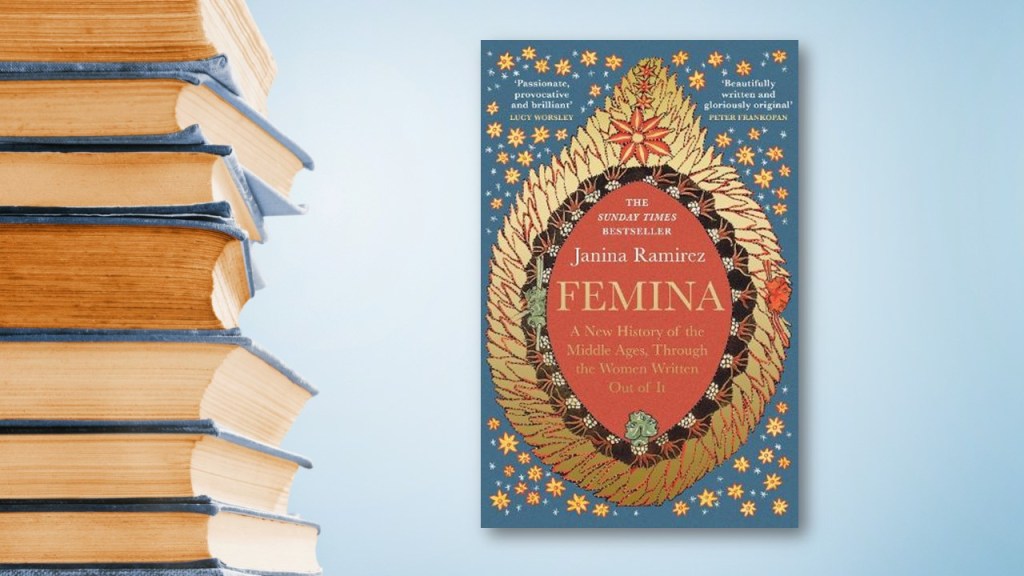
This was a book that I had pre-ordered a long time in advance, and finally arrived in beautiful shining hardback. I like Janina Ramirez (a fellow history graduate of York university!), and loved the idea of this book as soon as she revealed it on Twitter. Once I had received it, I started reading immediately.
The book worked through the Middle Ages logically and chronologically, taking a century per chapter and always beginning with a relevant historical discovery. Many of these discoveries were unknown to me (my particular period of history being the Early Modern period) and exciting – it was particularly interesting to read about evidence of medieval trans people. I enjoyed the evocative descriptions of the period and the abundance of images, and I found myself learning a great deal.
However, the book was a victim of my towering expectations, as I felt it lacked the common thread that I was anticipating. The author set herself a nigh on impossible task – writing about history using women written out of history. The impossibility of this task became self-evident: some chapters had to rely on scant archaeological evidence, whilst others had to rely on well-known historical women. The focus on individuals was a subtle subversion of my expectations: I had anticipated that the author would reveal what it was like to be female (in an ordinary, insignificant sort of way) in the Middle Ages. Instead, I felt that the history of Middle Ages men was being revealed to me through the eyes of just a few (significant) women.
You’ve Got This: Seven Steps to a Life You Love – Dr Michaela Dunbar
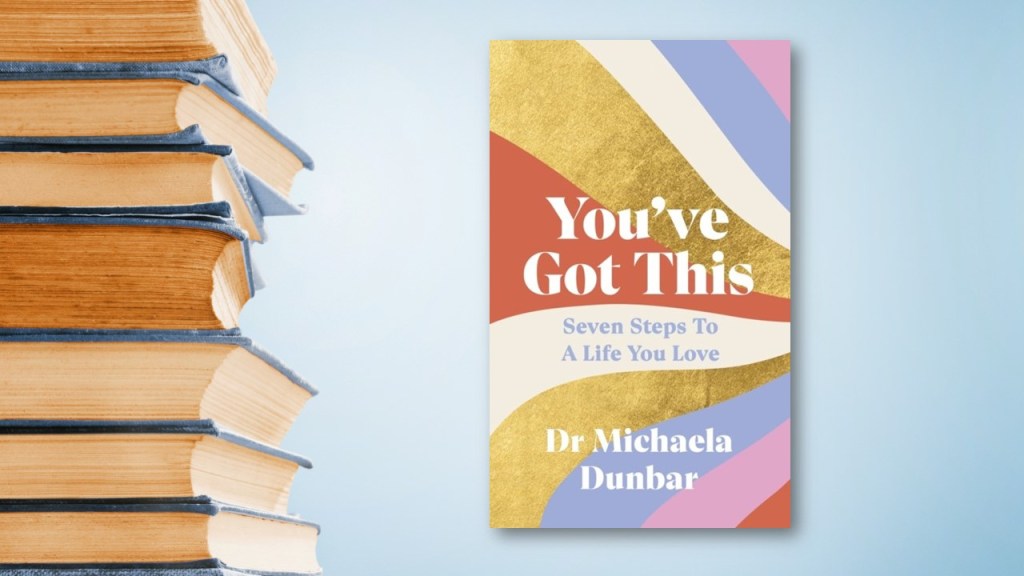
This was an e-reader daily deal which I picked up for 99p. A cheerful little read, and an appropriate one for someone who suffers from anxiety. The author is a clinical psychologist, and provides strategies for dealing with things like imposter syndrome and fear of failure (tick, tick). A lot of it was vaguely familiar to me, because I’ve had CBT and my sister is studying clinical psychology, but I found that familiarity reassuring. It’s one of those books which you get the most out of if you do the exercises – which I’m afraid I didn’t. Thankfully my anxiety is generally quite well under control these days, but if it rears its head again I would happily return to this hopeful book and follow its advice.
The Other Bennet Sister – Janice Hadlow
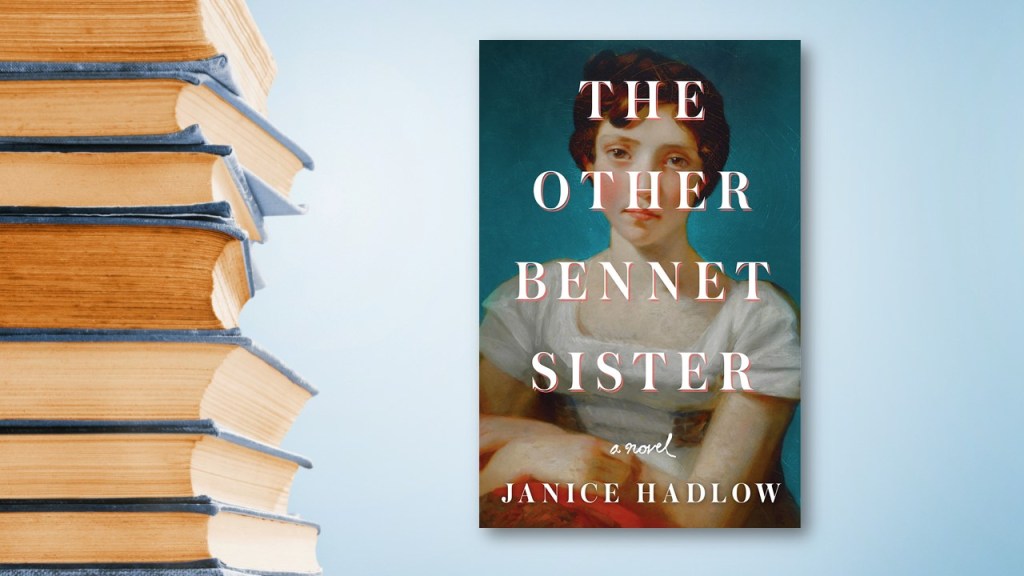
This was a book I had heard of before: a novel from the point of view of Mary Bennet, the middle sister of five in Pride and Prejudice. I am fond of Jane Austen, so when I saw it was an e-reader daily deal I was keen to snatch it up (with just a little trepidation – given my affection for the source material). I needn’t have worried – the story was in safe hands. The first part of the book follows the events of P&P through Mary’s eyes. I was impressed by the author’s imitation of Austen’s writing style, and the credibility of Mary’s perspective. The events of P&P, Elizabeth’s story, are subtly adjusted through the lens of Mary’s character. For example, lacking the favour of Mr and Mrs Bennet, Mary’s understanding of her parents is much harsher. After the events of P&P (in which, let’s be honest, Mary plays a very minor part), she is granted her own story arc and character development. The continued plot is believable and engaging, and allows us glimpses into the imagined future lives of other characters which are equally believable.
If anything, the book is slightly over-indulgent of its subject. It is immensely long, and I think could have benefited from some curtailing. Nevertheless, I heartily enjoyed revisiting the realms of Longbourn, Netherfield and Pemberley.
The Time Keeper – Mitch Albom
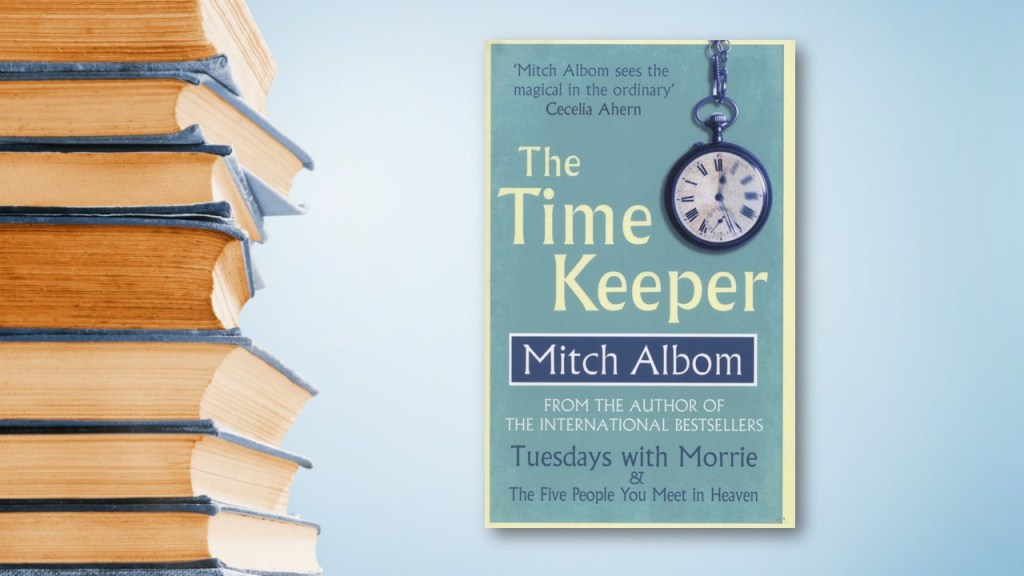
This was the first book I read for my new book group, and a nice short one to get me started! It tells the tale of the inventor of the first clock, who is punished for so quantifying time by being made to listen to everyone’s time-related wishes (wishes for more time, wishes for time to pass more quickly, etc.) for an eternity. Then he is presented with two people to help: an old man wishing to defeat death, and a young girl wishing her life away.
I liked the idea of this book. I felt it had some interesting messages to convey about the value we place on time, on life and on busyness. But I felt that the text was too short to explore these themes adequately. It was an extraordinarily quick read – a flickering sprint through the three interwoven stories. I didn’t feel any affinity with the sketchily drawn characters. I also resented the premise that the clock inventor was being punished for taking measurements (punished for being curious! methodical! a scientist!). Like the rest of the book, the ending was hastily wrapped up, and left me feeling unsatisfied.
The book divided the book group. Some people loved it, especially for its messages about freedom from time management. I was probably the least keen on it, but there were certainly others who were sceptical. It was interesting to hear a variety of perspectives!
Quarter Share – Nathan Lowell
Unusually, I listened to this as an audiobook (in fact, an audiobook separated into podcast episodes). I’ve been trying to listen to podcasts while I do chores about the house, instead of watching TV series on my phone which end up sucking me in and stealing my time… This was a podcast recommended to me by a friend who loves science fiction. It is a space opera, and the first in a series of books following the progress of a teenage boy who signs up to serve on a deep space commercial freighter.
When my friend starting recommending sci-fi series to me, I explained to him that I have a bit of a problem with reading sci-fi – that I struggle to visualise the weird and wonderful worlds and sequences the authors come up with. That wasn’t really a problem with this book. In the pleasantest way possible – it was entirely mundane! Extremely little happened! We learn a tremendous amount about how the ship operates, how trade is done, how coffee is made… I pottered about the house doing jobs listening to a story about other people doing jobs.
I’m not in a rush to listen to the next one. But I might do.
Matrix – Lauren Groff
I picked up this book from a great little shop in Exeter, which we visited with an old schoolfriend who was keen to sniff out a bookshop. A historical novel about powerful nuns? The bookshop owner had loved it, and it sounded right up my street.
Unfortunately it wasn’t. I struggled with the writing style, which was poetic and hard to grasp. I failed to understand our protagonist, let alone feel any empathy for her. I also perhaps should have paid more attention to the reviews on the cover of my copy: “full of passion”, “lush, gripping, ferocious”, “sensual”. The book was visceral in its descriptions of both sex and violence. What I expected vs what I got was captured in this quote:
Mystics are ethereal creatures, and Marie was the opposite of ethereal. She was massive, fleshy, ruled by her hungers.
Matrix – Lauren Groff
All very well and good, but not my cup of tea.
Winter in Madrid – C. J. Sansom
This was the September book group read. And, in a truly staggering instance of serendipity, I was in Madrid this month for a conference, never having even been to Spain before.
This coincidence radically changed my entire experience of the book. I can say this with certainty, because I tried to read it a few years ago (I picked it up as a daily deal on the Kindle I was using at the time – classic me). I struggled so much to imagine Madrid in the Spanish Civil War that I couldn’t persevere with it.
This time was very different. I started to read the book on my long journey out (three trains, a wait at the airport, and then a flight). And, although I still couldn’t quite picture the setting, I was excited to see the city in the flesh. Madrid already had more meaning for me.
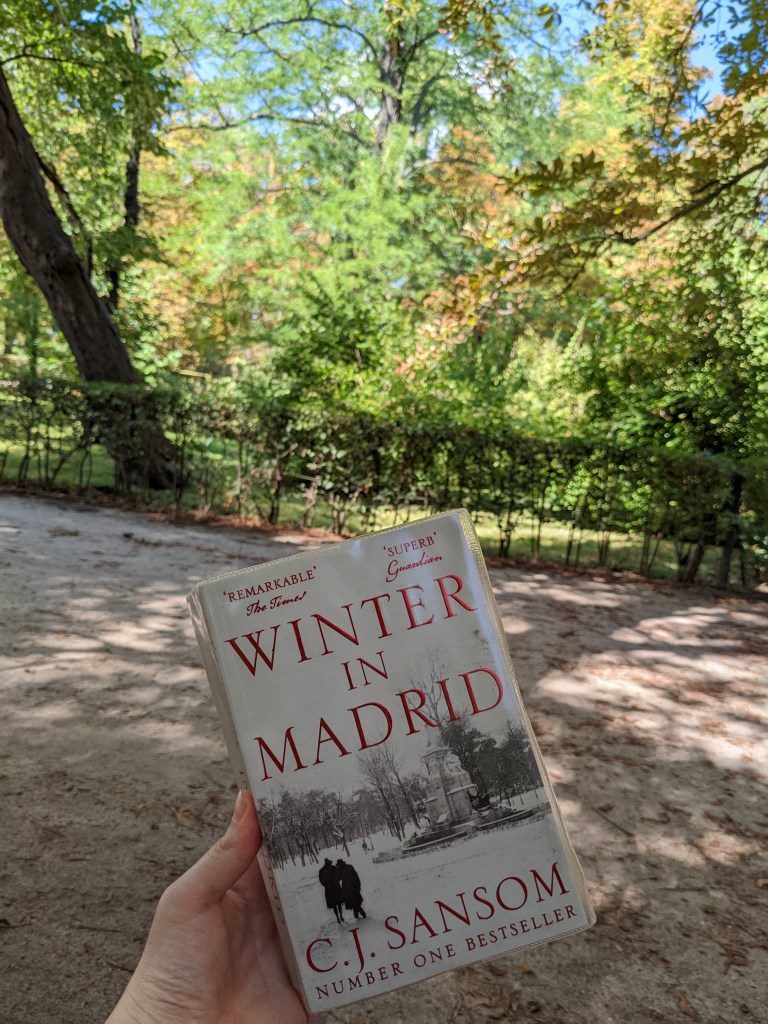
I continued to read it during my time in Spain. I went out for a meal with my colleagues, and the city became a little more familiar. I spent a day exploring, and the city became a lot more familiar. As I explored, I carried the book around in my bag. The photo above was taken in the Parque de El Retiro, which I visited in the heat of the day. I would walk a while, and then sit to read a chapter, walk a while, then sit to read a chapter. Meanwhile life in Madrid swilled about me. Not only could I now picture the physicality of the place, I could also picture the culture.
It was special to read a book in its setting like this, but it didn’t entice me to fall in love with it. The story was compelling – set during and after the Spanish Civil War, following the interwoven lives of three men who went to an English public school together and ended up occupying very different parts of the political spectrum. It was neat and clever, incredibly well-researched, with a satisfying (albeit thoroughly depressing) conclusion. But my complaint (and the complaint of most of the book group, as we discussed it over a Spanish-themed meal) was the length. It was a fat tome with an irregular pace – much of the book seemed very slow, but the end was dizzyingly quick. Much could have been achieved in a much shorter volume.
In the end, I decided not to write a little pencil note in the front of the library book saying “this book went to Madrid, September 2022!”. That can be its own secret.
 Cryptic Meg