Why Did You Stay?: A Memoir About Self-Worth – Rebecca Humphries
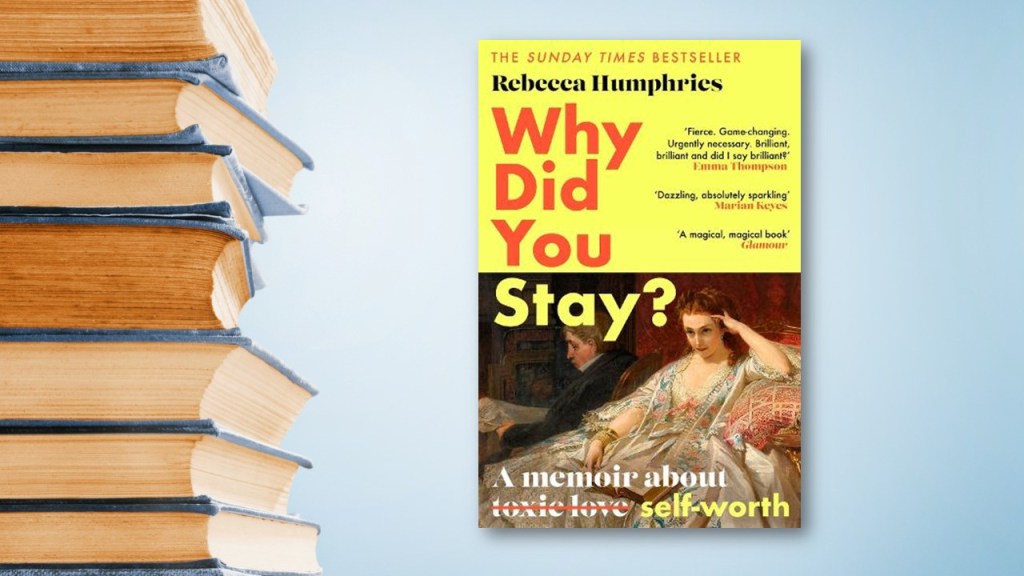
This was an e-reader daily deal I picked up, knowing extremely little about it! The book began with a statement which I was surprised to realise I had read before. Rebecca Humphries is an actress whose partner had been competing on Strictly Come Dancing. What triggered her statement was an instance of the infamous “Strictly curse”: her boyfriend and the professional dancer with whom he had been paired were photographed kissing on a night out after rehearsals. That same night, Rebecca was waiting for him to come home to celebrate her birthday. After the emergence of the photos she left him, and took the cat.
I really felt for Rebecca as I read about her very personal response to a very public humiliation. But it’s not really a book about that. It’s not really about being or dating a celebrity, or being humiliated and then applauded on a national stage. It’s about a bad relationship.
Rebecca and her partner had been together for over five years. By the end she had many reasons to break up with him: aside from having been unfaithful (more than once, it transpired), he had also been emotionally abusive. He would tell her that she was crazy, that she misremembered things, that she was overreacting/dramatic/paranoid. She became very isolated and unhappy. Someone asked her on Twitter: “if he was really that bad, why did you stay?” This book is her considered response to that: because she was dependent on him emotionally and financially, because she was worried that she was crazy, because he always persuaded her to stay.
I think it’s an important read. It’s an insight into the kind of manipulative behaviour which can increase insidiously over time. (I was chilled to realise that I was reminded of someone whom I thankfully long ago jettisoned as a friend.) It’s also an insight into why it can be hard for people to leave abusive relationships. I was so glad to see that Rebecca is much more fulfilled and confident having moved on, and I hope that her account might equip other people in bad relationships to do the same.
Storyland: A New Mythology of Britain – Amy Jeffs
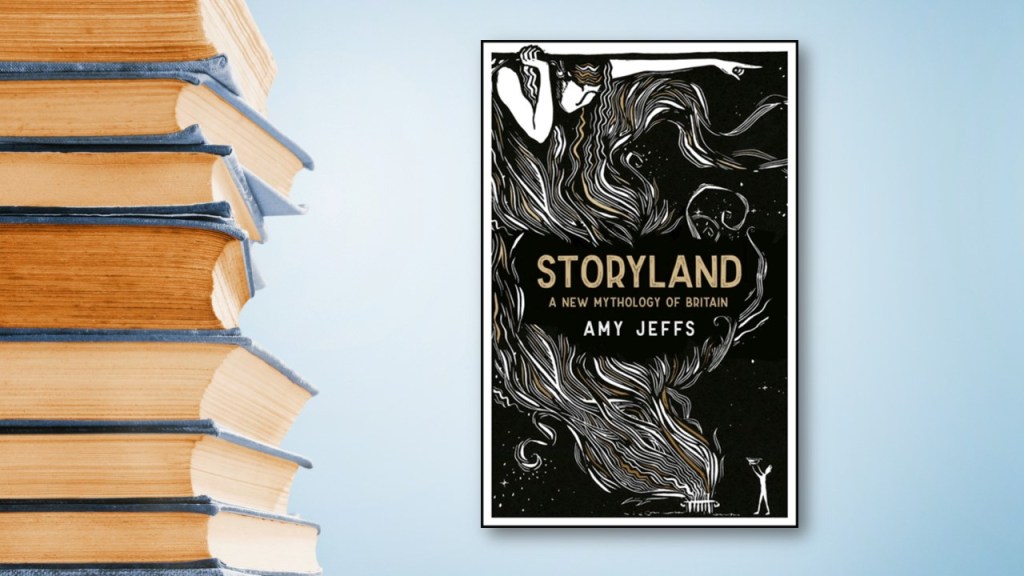
This book was passed onto me by my mum, who had read it in her book group. It’s a gorgeous looking thing, illustrated by the author in intricate linocut prints.
The author retells 30 medieval legends about Britain’s origins, arranged chronologically. We start with giants carrying the stones of Stonehenge from Africa to Ireland, we pass through tales of King Arthur, and we end with a giant being vanquished early in the reign of William the Conqueror.
There was a lot I liked about this book. It was beautiful; it was organised; it was assiduously researched. The author did what I always want authors to do in matters of history: she responsibly detailed her sources and she revealed which bits she had altered or embellished and why (there was almost too much of this – you can tell that she’s a historian by training!).
I did struggle with the pace, however. I think I read the book in the wrong way – ploughing through it like I would any other. This meant that I would take in several stories in a sitting, rushing headlong through history, which was quite unsettling. I think I would have enjoyed it more if I had limited myself to one story at a time.
Milkman – Anna Burns
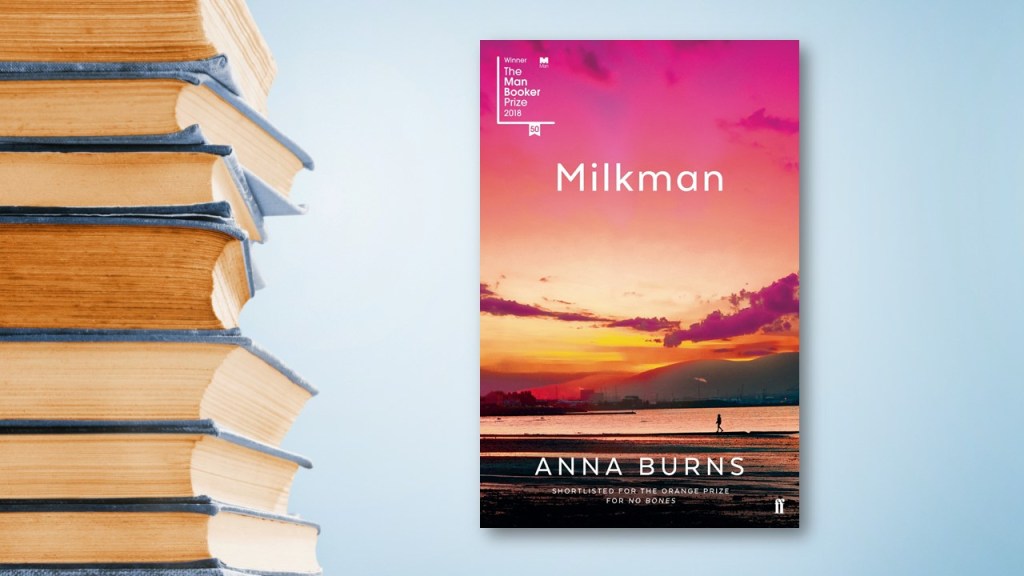
This was this month’s book group read. It’s also the first book I’ve reviewed on this blog that I haven’t finished!
I try very hard to finish books, but (as I’ve written about previously) it has helped me in my reading endeavours to give myself permission to give up on them. I’ve yet to decide on my personal algorithm for how much of a book to endure before making the decision. My aunt passed on a rule: 100 pages minus your age (the idea being, of course, that as you get older your time is more precious!). My book group have a relatively arbitrary rule recommended to them by an author: 67 pages. Being 29, both rules currently mean much the same for me. In Milkman, there was a chapter which ended on page 68 – so I persevered until then.
My problem with Milkman was that I found it utterly inaccessible. The writing style was hard to grasp: a stream of consciousness in immensely long paragraphs and few chapters. The characters are unnamed, and everything is referred to in vague, relative terms. The book is set during The Troubles in Northern Ireland in the 1970s, something about which I know embarrassingly little. The book doesn’t set out to teach you – it assumes you already know. So I couldn’t understand the references, the slang, the themes – the underlying code of it.
It was certainly divisive in the book group. Half of us couldn’t finish it, mainly because of the bizarre narration. The half who finished it loved it. They thought it was very powerful, and funny (something which I couldn’t comprehend at all!). Interesting how quite like-minded people can have such polarised opinions!
Secret Books…

At the end of the month I started reading a couple of books that friends have written (and not published yet, hence the secrecy). My oldest friend is writing a novel about AI. Knowing my interest in it, she came to visit me and told me the plot, before sending me the first few chapters and asking for my thoughts. I loved the idea and I love the writing – so I’m very excited to see where she goes with it. I’m also reading a book by a friend from church, who is using our little Dartmoor parish as the backdrop for his novel. I’m quite envious of the creativity of my friends – perhaps it will inspire me to get writing myself!
 Cryptic Meg