I’ve been trying to write book reviews recently as part of my reading record to encourage me to engage critically with the books. But I’ve found that sometimes there isn’t a great deal to say about a book, and sometimes I go through phases of not reading as much as I would like. So, to allow for these things, I thought I might group a few reviews together.
(All of the following were Kobo daily deals that I picked up for 99p. It’s certainly helping me to read a variety of genres!)
Brief Answers to the Big Questions – Stephen Hawking
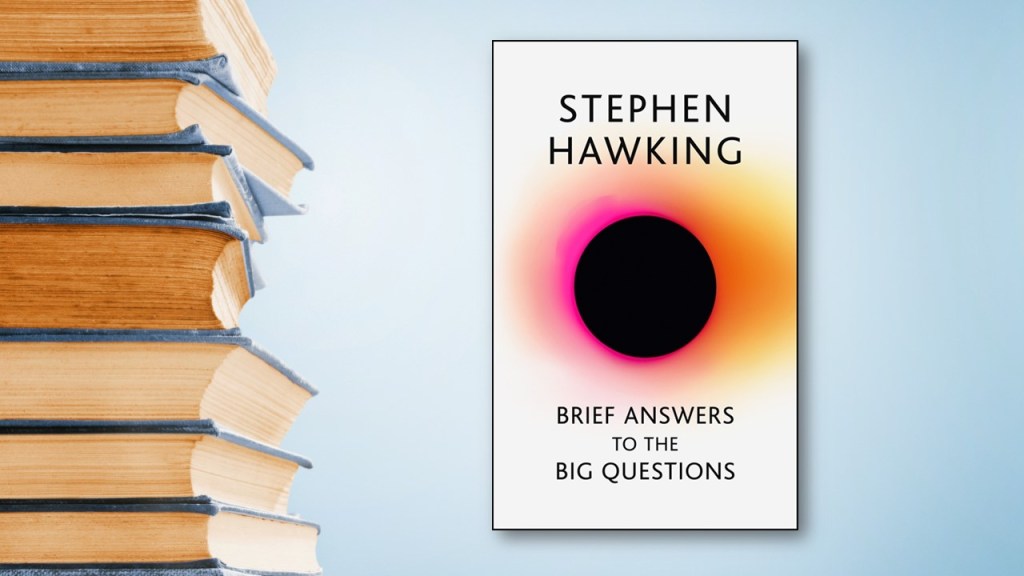
Brief Answers was the final book penned by the renowned physicist Professor Stephen Hawking. In fact it was incomplete when he died, which explains why it feels rather “padded out” with various forewords and afterwords. It is a short read, even taking into account the excess – but a good one. Hawking is well-known for his ability to condense complicated scientific principles into accessible prose – he believed that it was important to be able to describe ideas without resorting to difficult equations.
In this book Hawking discusses questions such as “how did it all begin?”, “will we survive on Earth?” and “is there other intelligent life in the universe?”. As a Christian, I was particularly challenged by the first chapter: “is there a God?” – but he discusses the issue with sensitivity and respect. And due to my research, I was also particularly interested in the chapter: “will artificial intelligence outsmart us?”. In my opinion, this existential crisis-inducing question often overshadows the more pressing problems of existing artificial intelligence (such as issues of biased decision making and mistakes). But Hawking did set out to answer the big questions, so I’m inclined to forgive him for that focus.
On the day I finished reading the book, a government education advisor said that girls avoid doing physics A-level because they dislike “hard maths”. This rightly caused much outrage, and I was one of many to feel affronted. When I returned to Hawking later in the day, I was particularly struck by the concluding lines of the main body of the book: “We never really know where the next great scientific discovery will come from, nor who will make it. Opening up the thrill and wonder of scientific discovery, creating innovative and accessible ways to reach out to the widest young audience possible, greatly increases the chances of finding and inspiring the new Einstein. Wherever she might be.”
Cecily – Annie Garthwaite

This debut novel tells the tale of Cecily Neville (1415-1495), Duchess of York and mother of Edward IV and Richard III. The book begins with Cecily watching the burning of Joan of Arc in 1431, and follows her life up until the point that her eldest son ascends the throne in 1461.
I must admit to having a complicated relationship with historical fiction. On the one hand, I was inspired to do a history degree in part by this very genre. It brings the past to life, usually in a much more engaging manner than my studies ended up doing! On the other hand… I am now regrettably a history snob. I bristle at inaccuracies and anachronisms, especially if the author does not acknowledge the alterations that they have made to the past. I want to remind them of their duty of education: for some readers, this will be their initiation into (and perhaps only encounter with) the subject matter. It is the author’s responsibility to tell them the truth, and to shed light on those areas where they have taken liberties.
What Cecily did for me was demonstrate that I am impossible to please. This book was clearly very well researched. The events corresponded to the historical events as I know them. And it made it… slightly dull! I liked the book, and liked the focus on this female historical figure and her autonomy over major historical developments. But it dragged in places, precisely because it was so true to life. Cecily Neville had twelve children, so much of the book was concerned with her series of pregnancies, confinements and births. This repetition didn’t appeal to me, in spite of its adherence to fact. I confess: I am impossible.
The Leviathan – Rosie Andrews
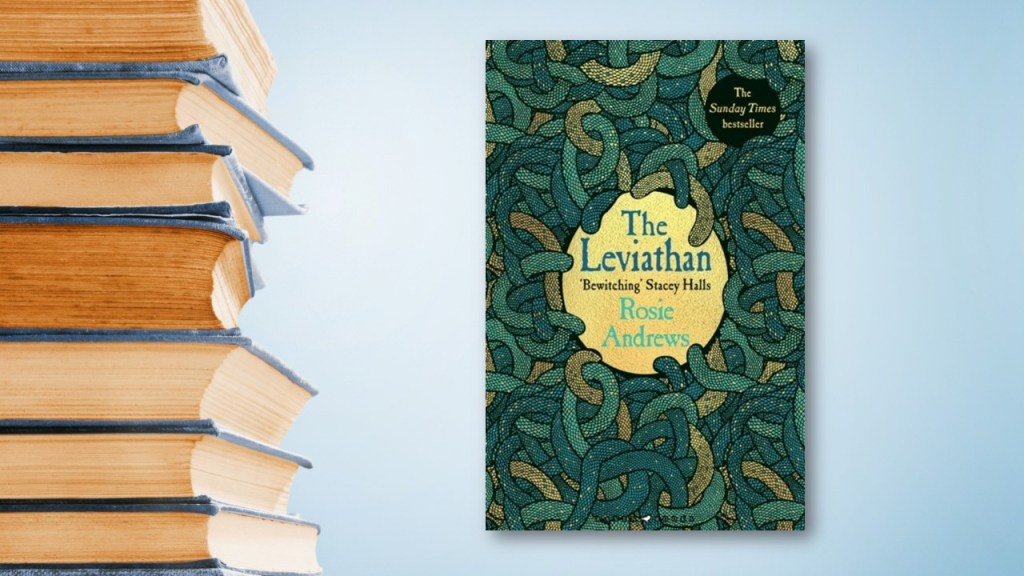
My next book was another debut. The genre? Historical fiction. I never learn.
This, however, was an entirely different beast (ho ho). The historical setting was real, but the characters were not. It begins in 1643 with a man returning home from fighting in the civil war. He returns to a family home beset with tragedies, precipitated by the arrival of a new servant who has since been imprisoned on the charge of witchcraft. He sets about finding the cause of all the strange goings-on.
This was a book of two halves. The first half was mysterious, suspenseful, and kept me on my toes. But it was at the halfway point that the mystery was resolved, unsatisfactorily, and rest of the book seemed to writhe desperately to reach a conclusion. It was daft and directionless. A promising start, a disappointing end.
Assembly – Natasha Brown

This was a very short read – so short that I read it all in one train journey (appropriately – as a train journey formed a significant part of it). It is written from the point of view of a black British woman who is on her way to attend a garden party at her boyfriend’s family’s stately home. She reflects on her life full of discordant parts – a working class background, a successful career, constant racism and sexism, a cancer diagnosis, a relationship with no future.
The piece is written in poetic prose, which is punchy and shocking. The stream of consciousness is intimate and powerful. In such a short space it reveals so much about race and class and identity. As the protagonist prepares to dismantle her life and take control, the author dismantles any cosy ideas we might have about equality in our society. An uncomfortable, challenging and important read.
 Cryptic Meg
I have the same problem with historical fiction. I am a huge fan of the genre but I am heavily disappointed by inaccuracies – not only the ones about historical facts but also the ones about mentality.
I haven’t read that particular book by Stephen Hawking. The line you quoted was very inspiring – wherever she might be indeed.
LikeLike