Tidelands – Philippa Gregory

When I was 17 and applying to universities to do a history degree, I had to write a personal statement. In that personal statement, I wrote that my particular interest in the Tudors, initially lit in primary school, had been fanned in later years by reading Philippa Gregory’s Tudor court novels. I had found them so evocative, so intriguing, and they inspired me to go and do my own research.
Twelve years have passed since I wrote that personal statement, and almost as much time has passed since I last read a novel by Philippa Gregory. When Tidelands, the first in a series set in the English Civil War, popped up as an e-reader daily deal, a nostalgic impulse urged me to get it for old times’ sake: to revisit the author who had had such an influence on the course of my life.
Sometimes it’s a mistake to visit old haunts.
I learned that lesson not long ago when I tried to re-read Enid Blyton’s Famous Five books. I loved them as a child, read them all – but re-reading the first as an adult I was horrified to realise how badly written it was. With Tidelands, I found myself in a similar place of bemusement and self-reproach for my former taste.
This book was dire. I can’t sugar-coat it. It was crudely constructed and entirely predictable. The hints were so heavy that I successfully anticipated *every* major plot point, smacking my forehead sarcastically every time my predictions came to fruition. A romance so clumsily conceived, intimate situations so artlessly contrived, a pregnancy so inevitable, a witch hunt the obvious climax. I persevered because I thought it would surely get better, surely there would be a twist, surely the author would reveal the skill which had previously invoked such affection in me? I was to be dreadfully disappointed.
The (NSFW) scene which so painfully drew my attention to the truly horrible writing was one in which the protagonist, knowledgeable in herbs and healing, is summoned to the side of her beloved. He has fallen unconscious with a fever; plague is suspected. She needs to search him for the tell-tale buboes. Instead of being fearful for her life and appalled by his obvious sickness, she is unaccountably aroused by undressing his unconscious feverish body. In a phrase that I fear will haunt me to the end of my days, she admires the “strength of his sleeping c*ck”.
Shudders. No thank you.
Stardust – Neil Gaiman
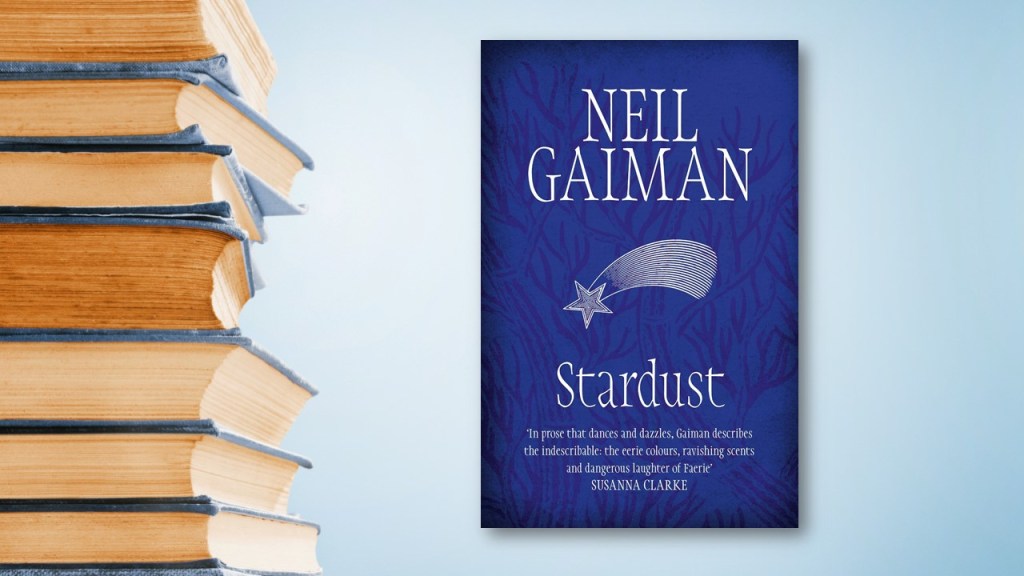
Another e-reader daily deal, I was interested to read Stardust because I’ve seen and enjoyed the film. I’ve also read far too little from Neil Gaiman – something which I intend to amend!
The fantastical tale of Tristran Thorn, who travels into the world of Faerie to retrieve a fallen star for his beloved, did not disappoint. I read it in two nights while we were camping, and there seemed something very appropriate about reading about the magical world beyond a village field while I was lying in a tent in the countryside under the stars. The book differed from the film and I could see why: the film added a climactic final showdown which wasn’t present, or needed, in the book. The book is a “fairy tale for adults”: graceful and gentle. It was a beautiful read.
Atonement – Ian McEwan

A further e-reader daily deal, and another book the film of which I’ve seen (albeit a long time ago). This meant that I remembered a few of the twists and turns, but in the end that didn’t matter.
Atonement is a clever and excruciating read. The first half concerns the events of one evening in 1935 at an English country house, witnessed (in a particular light) by a 13-year-old girl; the second half concerns the life-altering aftermath of her testament to those events. The pace is slow (nigh on meditative) and the book is long, but it is all beautifully written and finely balanced.
The major theme for me was one of perspective. The point of view shifted from chapter to chapter, which highlighted not only the characters’ differing understanding of the same events, but also the reader’s changing understanding of events. We read believing ourselves omniscient – the writer having granted us access, in this case, to a full complement of perspectives. But, as is sharply revealed later on, the reader’s perspective is wholly reliant on the truthfulness or artifice of the writer. This revelation elicited from me the most emotional response that I’ve had to a book in a long time – even with my prior knowledge, I was still shocked and dismayed by a truth held back, a blow dealt, an unspoken covenant broken. Ironically, I raged against the final unwelcome omniscience. Knowingly, the author posed this question:
How can a novelist achieve atonement when, with her absolute power of deciding outcomes, she is also God? There is no one, no entity or higher form that she can appeal to, or be reconciled with, or that can forgive her. There is nothing outside her. In her imagination she has set the limits and the terms. No atonement for God, or novelists, even if they are atheists. It was always an impossible task, and that was precisely the point. The attempt was all.
Atonement – Ian McEwan
So, although I feel wronged by the writer, who am I to feel so? There is nothing outside the writer – the story is his, the characters are his. I am but an observer to his construction. The difference for the 13-year-old Briony was that the characters in her account were actually outside of her; they were real people who were affected, and so the possibility was open to her to appeal to them, be reconciled with them, seek their forgiveness. Ian McEwan has no such recourse. In granting Briony her possibility of redemption he makes his own impossible attempt at atonement, but he makes no apology to the reader. It is brazen, confident, and heartbreaking. Atonement is a work that warrants further study and deeper contemplation, and I’ll be thinking about it for a long time.
The Confessions of Frannie Langton – Sara Collins
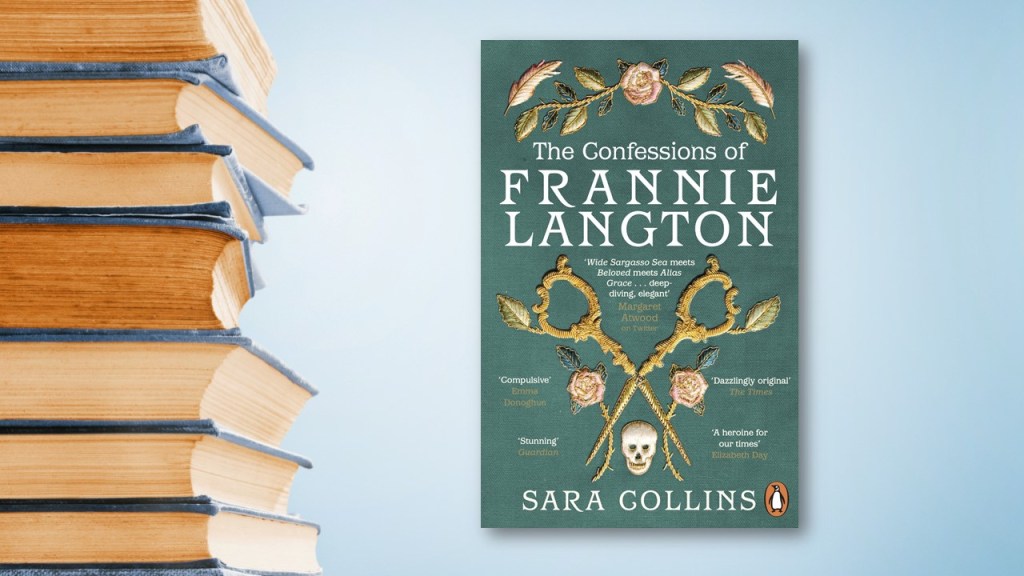
This was this month’s book group read. Frannie Langton is a former slave and servant, accused in 1846 of murdering her employers. She is writing her account from prison – covering her early life, her arrival in London, her romance with her mistress, and the events leading up to the murders.
I really wanted to like this book. It addressed immensely important and still-relevant issues, including racism, relationships and addiction. It was also an intriguing murder mystery: did our protagonist do it, and if so, why?
Unfortunately I was extremely hampered by the writing style, much more so than most other members of the group (who generally quite liked the book). It was full of strange imagery which I struggled to comprehend – I found myself re-reading entire paragraphs to try to grasp the meaning. A few people in the group had listened to it on audiobook (read by the author), and found that it was like listening to poetry, allowing them to latch onto the meaning much more easily than I had. This was an interesting observation regarding the difference between reading and listening to a book. (It reminds me a little of when I read the play Harry Potter and The Cursed Child – I didn’t enjoy it because the actors in my head weren’t very good!!)
The narrative became a major barrier to me. In some ways I think it was quite clever – it invoked the hurt of the abused and the confusion of a drug addict. But my lack of understanding led to a lack of sympathy for the main character. Someone else in the group rightly and gently pointed out that a lack of understanding should not prohibit compassion – but here I think is the boundary between fiction and reality. Had the book been a non-fictional autobiographical account, I would have set aside my frustration at the writing style and would have felt deep compassion for a person exposed to unrelenting misery. But this was a fictional account (read for pleasure? education? enlightenment?), so I am not obliged to overlook my perpetual frustration. It’s a profoundly personal perspective (and may well stem from my lack of visual imagination, bemoaned previously!) – but the messages that the author was trying to convey would have been much better conveyed to me in an entirely different manner. Hey, you can’t please everyone.
 Cryptic Meg
One thought on “Book Reviews: October”